Smoke for Urban Search and Rescue Training | ViCount 5000
How the Fire Service College uses smoke for urban search and rescue training
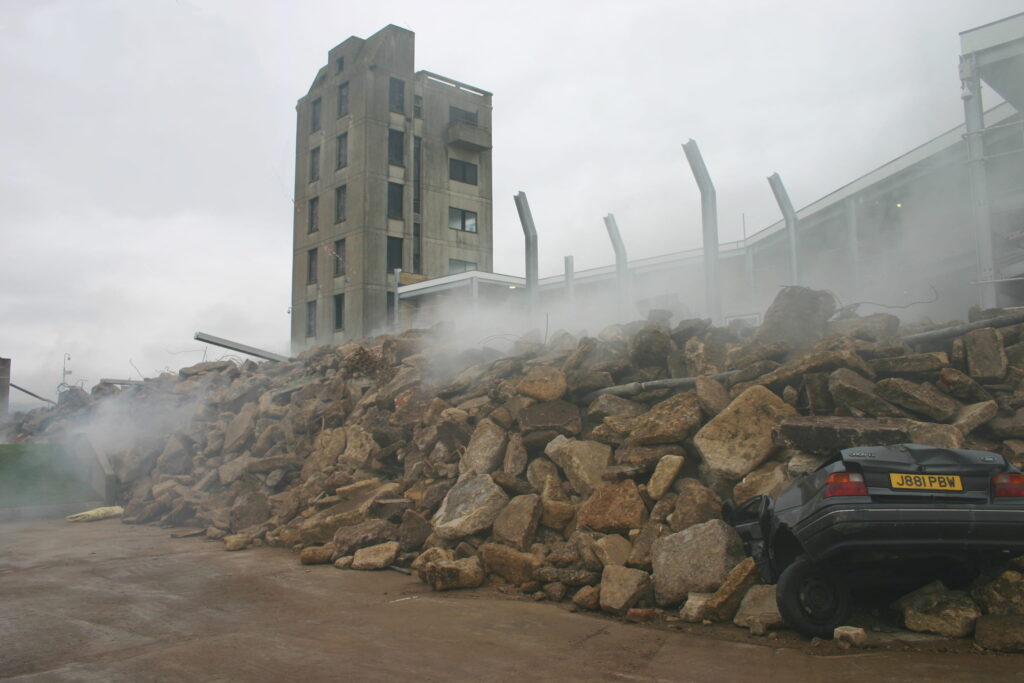
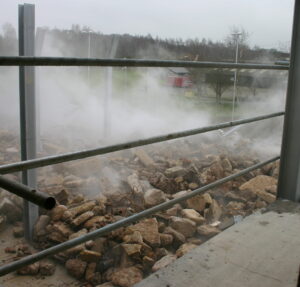
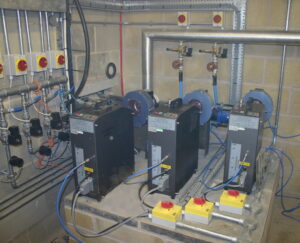
At the Fire Service College’s Media Day on 29 October 2026, journalists watched rescue crews work across the rubble of a simulated building collapse in Moreton-in-Marsh, Gloucestershire. Three ViCount 5000 industrial smoke generators from Concept Smoke Systems have for many years produced the smoke rising between the concrete slabs. From a nearby plant room, they feed 45 outlets beneath the College’s urban search and rescue (USAR) rubble pile.
From virtual reality to the incident ground
College instructor Alison Ellershaw described how the Incident Command Team brought several agencies together for the live major incident exercise. Journalists also visited the Immersive Skills Lab to see how emergency responders can practise making decisions under pressure in virtual reality before tackling a live scenario on the incident ground.
At the College’s Rig 5 and Rubble Pile, the training continues below ground. Crews can practise locating and rescuing casualties in a network of confined tunnels. Above them, the incident commander can see smoke breaking through different parts of the debris as the exercise unfolds.
How instructors control smoke beneath the rubble
When the College approached Concept in late 2004, the brief was to let instructors choose where smoke would appear. We paired each ViCount with a centrifugal blower feeding one of three branches of 110 mm ducting. Laid above the training crawl ways, the three branches extend to around 110 metres in total. An instructor can select a single zone for a localised effect or use two or three to bring smoke up across a wider area.
We chose oil-based smoke for its persistence outdoors. It has to travel along the duct, pass through the outlets and find its way between layers of concrete before a crew on the surface sees it. ViCount smoke stays visible throughout that journey and can linger over the rubble when the wind allows.
During commissioning, we checked the flow from every outlet before several hundred tonnes of rubble went on top. We then came back to test the finished pile. More than twenty years after that first brief, it’s good to see the installation still earning its keep.
Equipment used: